Making an entrance when your New York apartment has no foyer
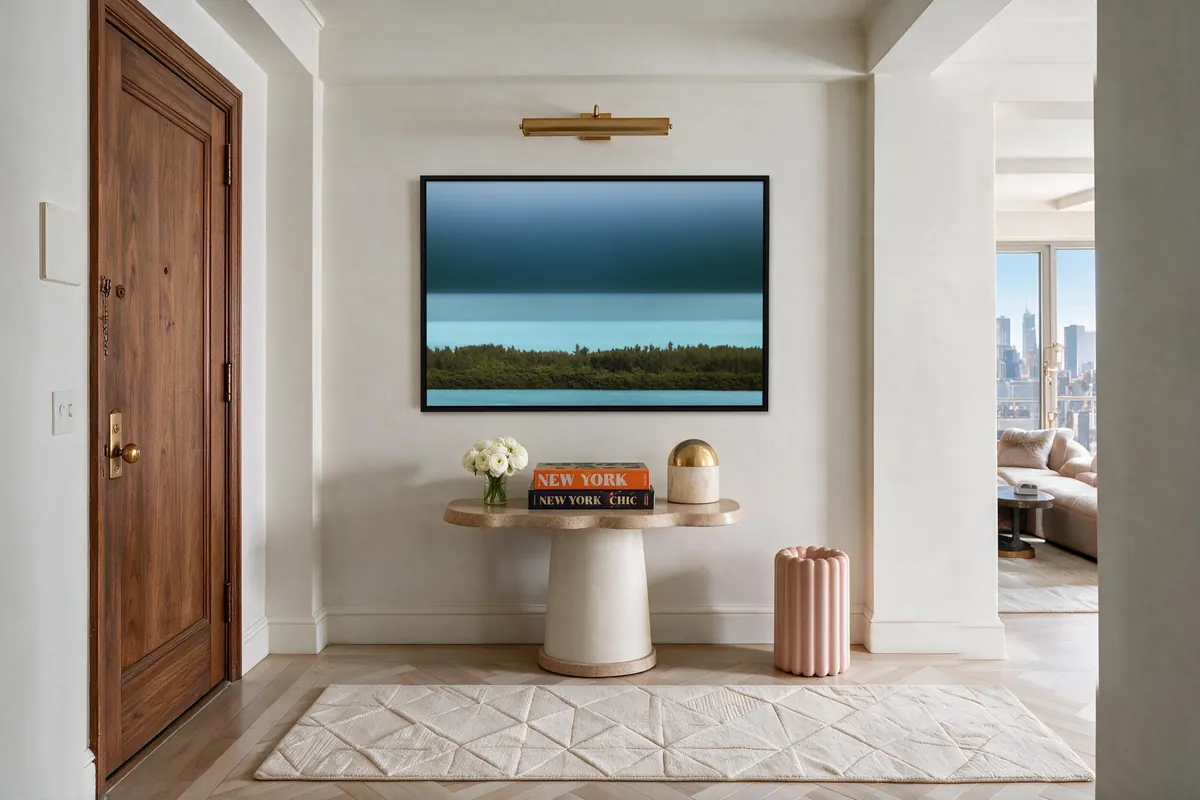
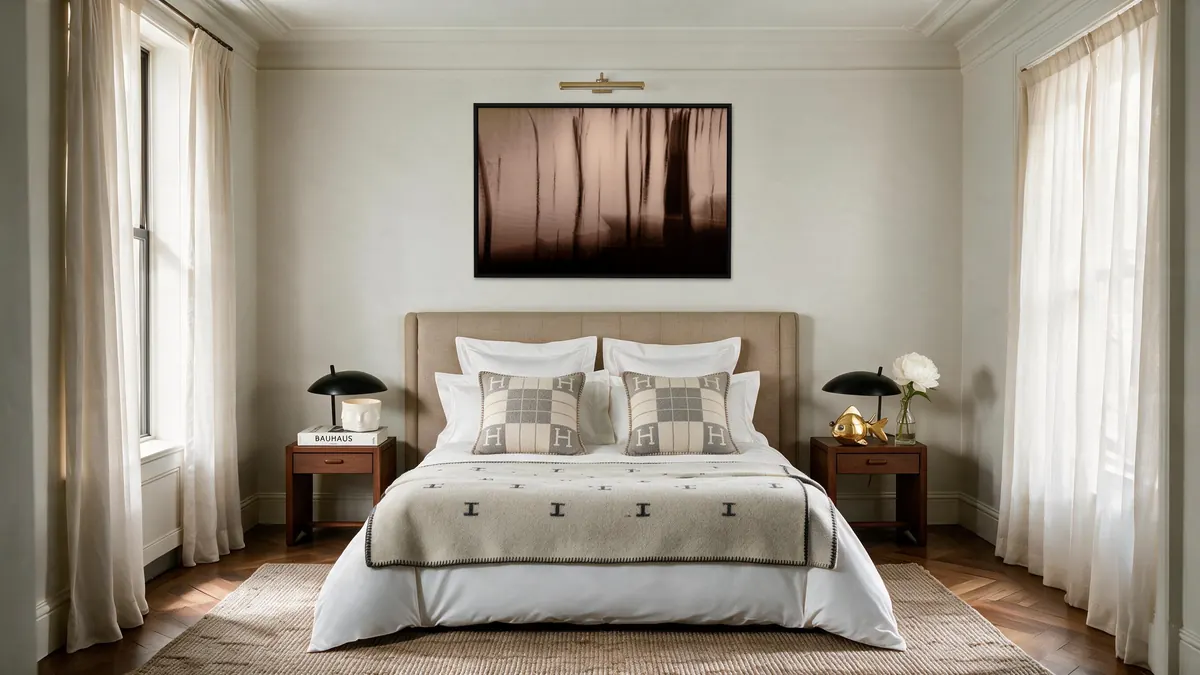
Concept studyOn the wall: The Green Line, Daniel Montero
You open the front door and you are in the living room, with the sofa a few steps away and nowhere to put your keys. You can still have an entry. If your door opens into the living room or a dark hall, mark the entry with a rug, one wall, and its own light. Keep the route from the door clear. Give the wall one job: a mirror or a photograph, a shallow surface, a hook. Set a lamp or sconce at eye level where daylight stops. Daniel Montero plans rooms this way at Edge Design Works. The fee is set after a private consultation, and a written fee limit is agreed before work starts. Furnishings are billed separately, at the makers' prices. The engagement page holds the full fee structure.
Find the entry you already have
Stand inside the door with your keys and note three things. Watch where the door swings. Trace the route your feet take to the living room or the kitchen. Then find the first wall your eye lands on. That wall and the floor in front of it make your entry, even in an apartment with no foyer on the plan.
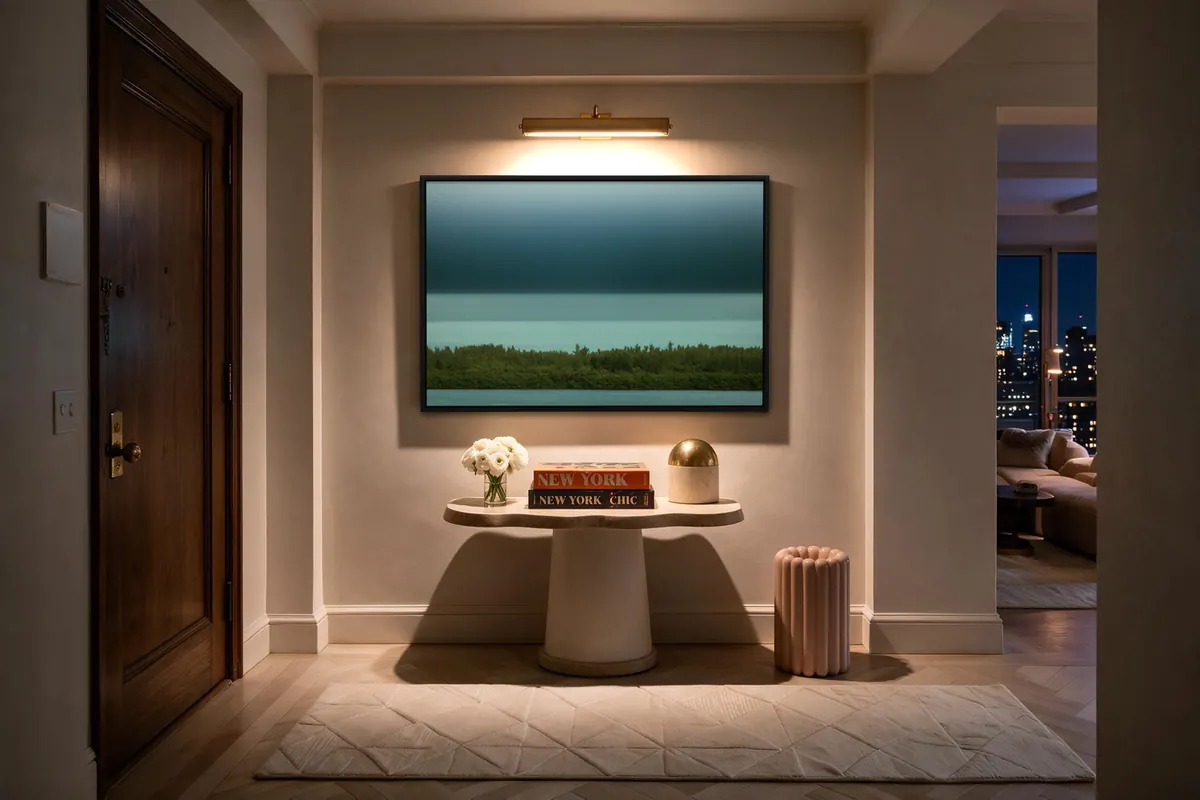
In a dark hall, the entry runs from the door to the point where you reach daylight. Walk it once with the lights off and once with them on. Take a photograph from the doorway at midday and another after dark. The two pictures show you what a guest sees first and what you see when you come home late.
Draw the edge without building a wall
A rug or runner inside the door tells your eye where the entry starts. Keep it clear of the door swing so the door doesn't catch it. On the far side, the back of the sofa, a console behind it, or an open shelf can mark the point where the living room begins.
Choose open or low pieces for that edge so light still crosses from the room to the door. A tall solid divider cuts off the window light and leaves a dark entry darker. If you want a real wall or a moved door, you are planning a renovation, and your architect, your contractor, and your building handle it. Building approvals and long-lead goods set the pace of that work, and What sets the pace in New York covers those clocks.
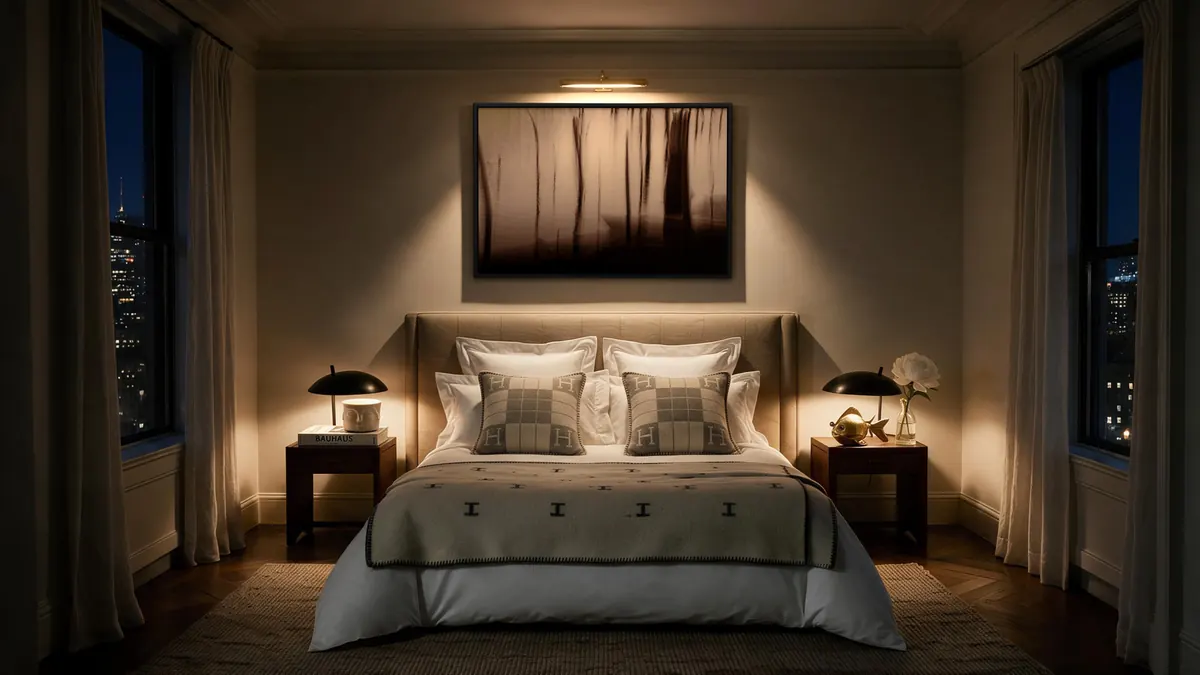
Concept studyOn the wall: The Silence Between the Tides, Daniel Montero
Give one wall one job
Pick the wall you see first and let it carry the entry. It holds three things:
a mirror or a photograph
a shallow surface for keys and mail
one hook, or a closet you can reach from the door
A single piece of art can carry an entry that has no view. One magazine tour this month showed a penthouse entry built around a large photograph, two chairs, and a rug. If a serious piece belongs on your wall, choosing collectible design walks through reading it against the room.
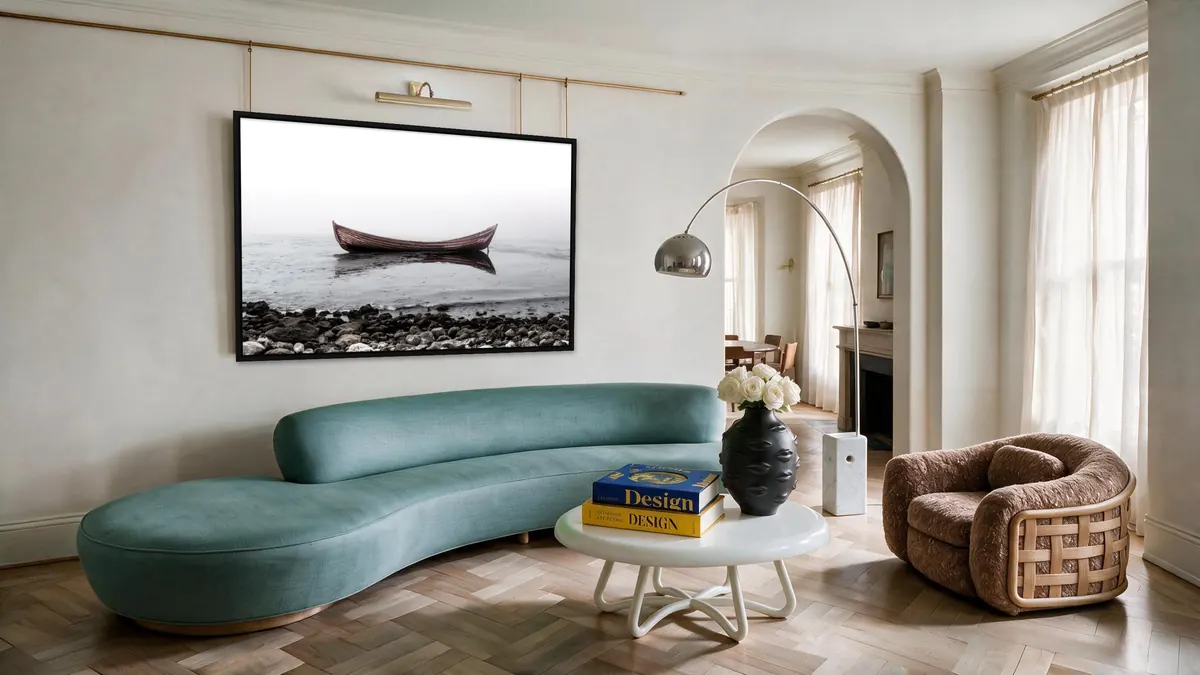
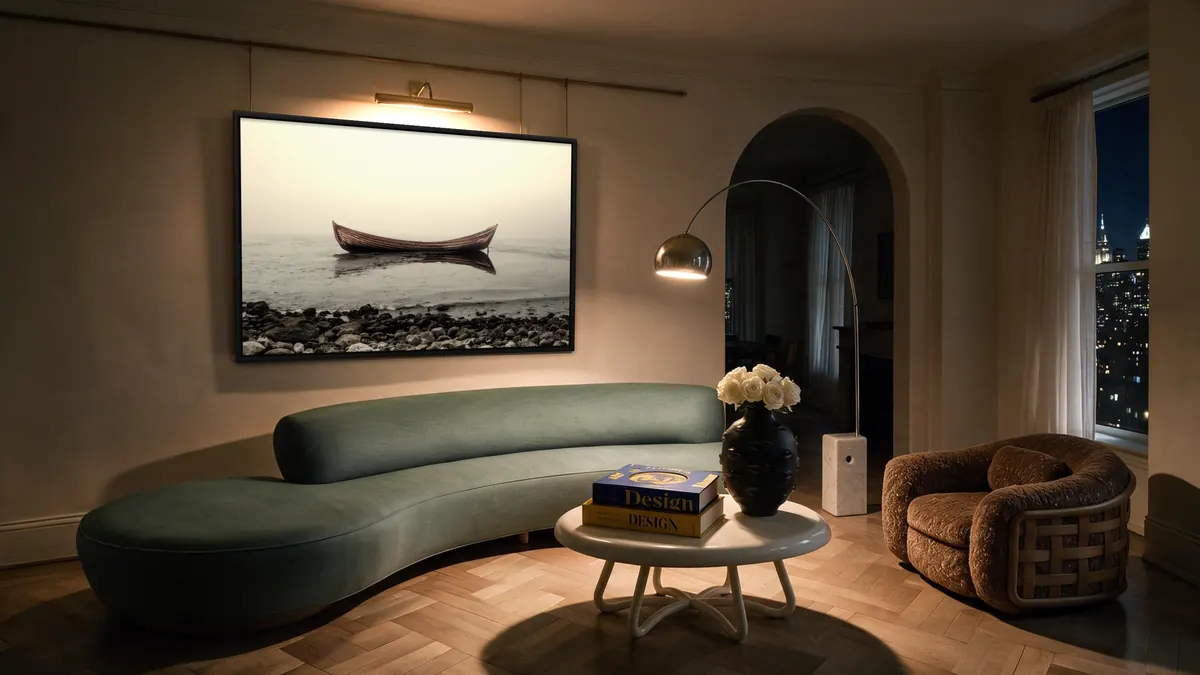
Daniel writes that wall down. In The Arched Salon, a journal living room, the schedule places a slim oak console on the rear wall beneath the artwork. One line names the piece and the wall it serves. A chair or stool earns a place by the door only if you sit on it to put on your shoes.
Light a dark entry
Start with daylight. Stand in the dark entry hall at midday and find the spot where the window light gives out. Your added light goes there.
A ceiling fixture alone lands on the top of your head and flattens the wall in front of you. Add light at eye level instead. A table lamp on the surface works. So does a plug-in sconce, or a pair of sconces beside the mirror. Set the mirror where it can catch a window across the room, then check the angle from the doorway, because a mirror that reflects a blank wall adds nothing.
Daniel photographs rooms as well as designing them, and he reads a dark entry the way he reads a dark frame: he finds where the daylight ends, then places the light you add at the height of your eyes. For evening arrivals, keep the light warm and low, with enough of it to find your keys.
Daniel plans the entry and writes it on the room schedule. Your electrician hangs any hardwired light, and your building sets the rules for that work.
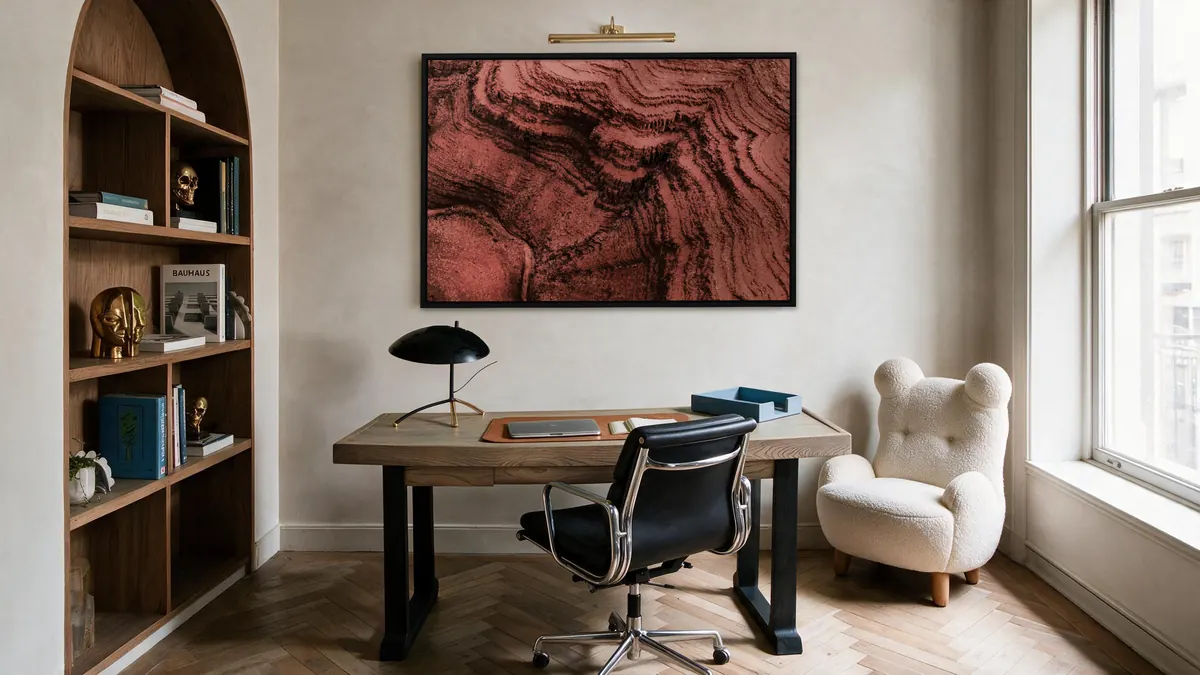
Concept studyOn the wall: Standing Water, Daniel Montero
What the entry has to hold
List what comes through the door each day: keys, mail, a bag, a winter coat, an umbrella. Give each one a stop near the door. Send everything else to a closet or another room.
A chest or closed cabinet hides more than an open shelf, and it can do a second job. In the pied-à-terre essay, a chest in the entry holds bath supplies for guests. Coats and boots in a small foyer need a hook or a closet. A bench that collects a pile of them stops working as a seat.
Writing the entry into the room schedule
Your NYC apartment entryway gets its own lines on the room schedule: the rug, the mirror or art, the surface, the lamp, and where each one sits. You can read the list against the doorway and see the entry before anyone buys a thing. The Park Bath shows how a schedule pins a mirror to a set position on a wall.
Remote work is the default. Daniel can plan an entry from your photographs and measurements, and he quotes a site visit on its own when the room needs one. The New York page shows where the studio takes work, and the process page lays out the sequence.
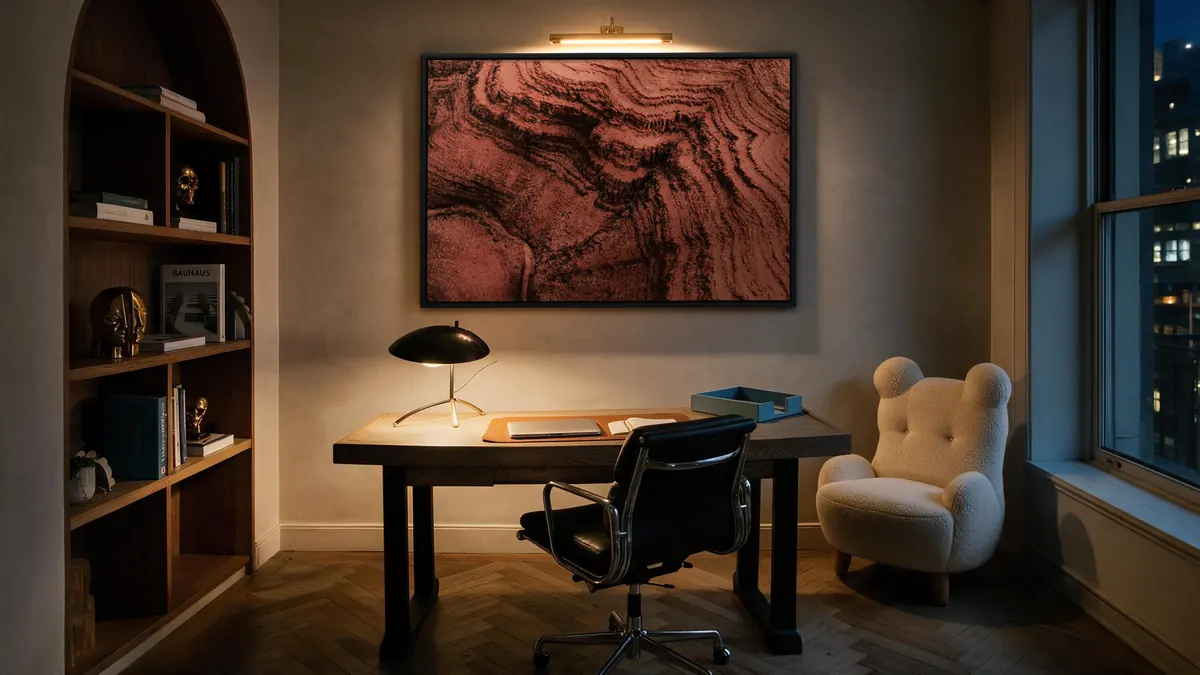
Concept studyOn the wall: Folded Ground, Daniel Montero
Limits of this essay
This essay covers furnishing and lighting an entry. Building walls and moving doors fall outside it. Daniel does not manage contractors or file permits, and your electrician and your building handle hardwired light. The essay recommends no products or makers. The journal rooms are concept studies. Journal stories show the method. Client work applies it to your rooms, and the fees sit on the engagement page.
Write about your entry
Email design@gildedge.com. A clear subject is Private interior design consultation: Entry. Send the room type (the entry, the hall, or the living room the door opens into), the location, the project stage, the desired scope, and the timeline you are under. That timeline might be a move, a refresh, or guests arriving. Daniel reads it as your constraint. He does not treat it as a finish date. Attach photographs from the doorway at midday and after dark, plus a floor plan or measurements.
The process page is the sequence after you write. The services page is the menu, and the engagement page is the fee.
Questions
How do you make an entry when the front door opens into the living room?
Mark the entry with a rug inside the door, the back of the sofa or a console as its edge, and one wall near the door that holds a mirror or art, a surface for keys, and a hook. Keep the route from the door into the room clear.
How do you light a dark entry hall in a New York apartment?
Read where daylight stops before you buy a fixture. Add light at eye level with a lamp, a plug-in sconce, or a pair of sconces beside a mirror, and set a mirror where it can catch light from a window. Hardwired fixtures go through your building and your electrician.
Can Edge Design Works help with just the entry?
Yes. Daniel Montero offers single-room concept and specification, and an entry can be that room. The fee is set after a private consultation, with a written fee limit agreed before work begins, and furnishings are billed separately at the makers' prices. Send photos and measurements of the entry to design@gildedge.com.
Private interior design
Request a consultation
Send the five fields and two photographs from your doorway. The Arched Salon shows one wall written down as a schedule line.